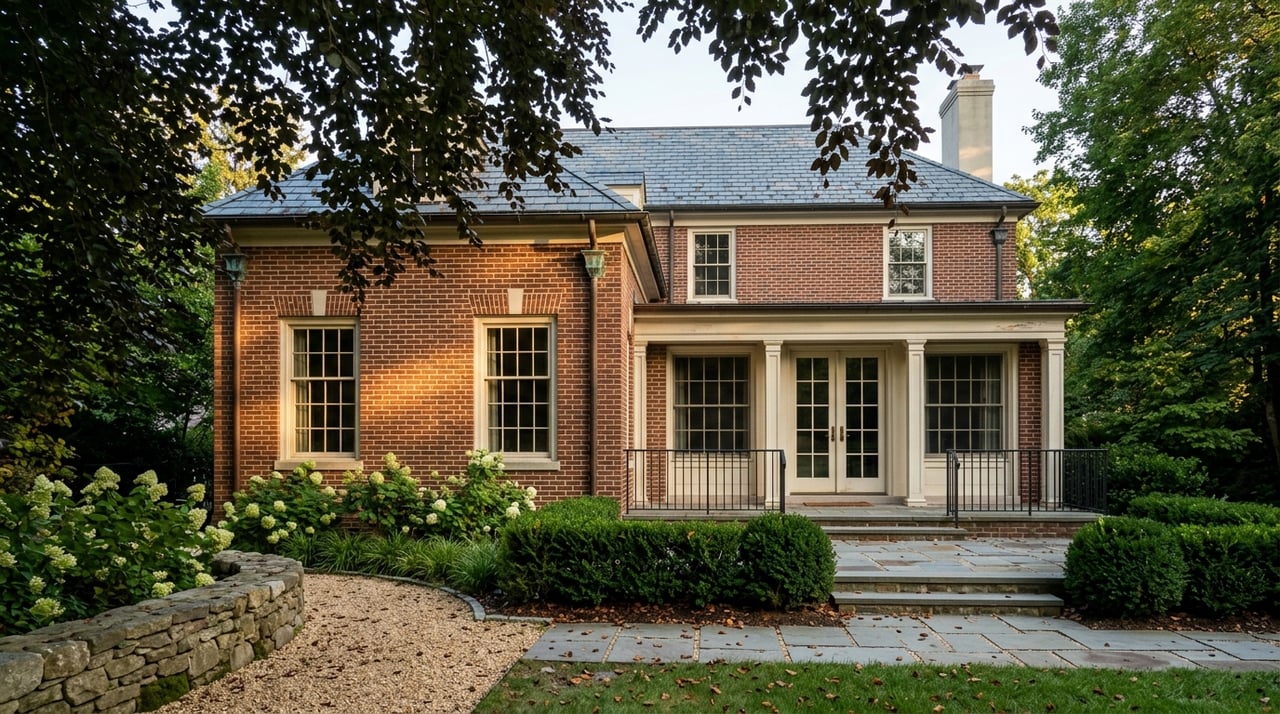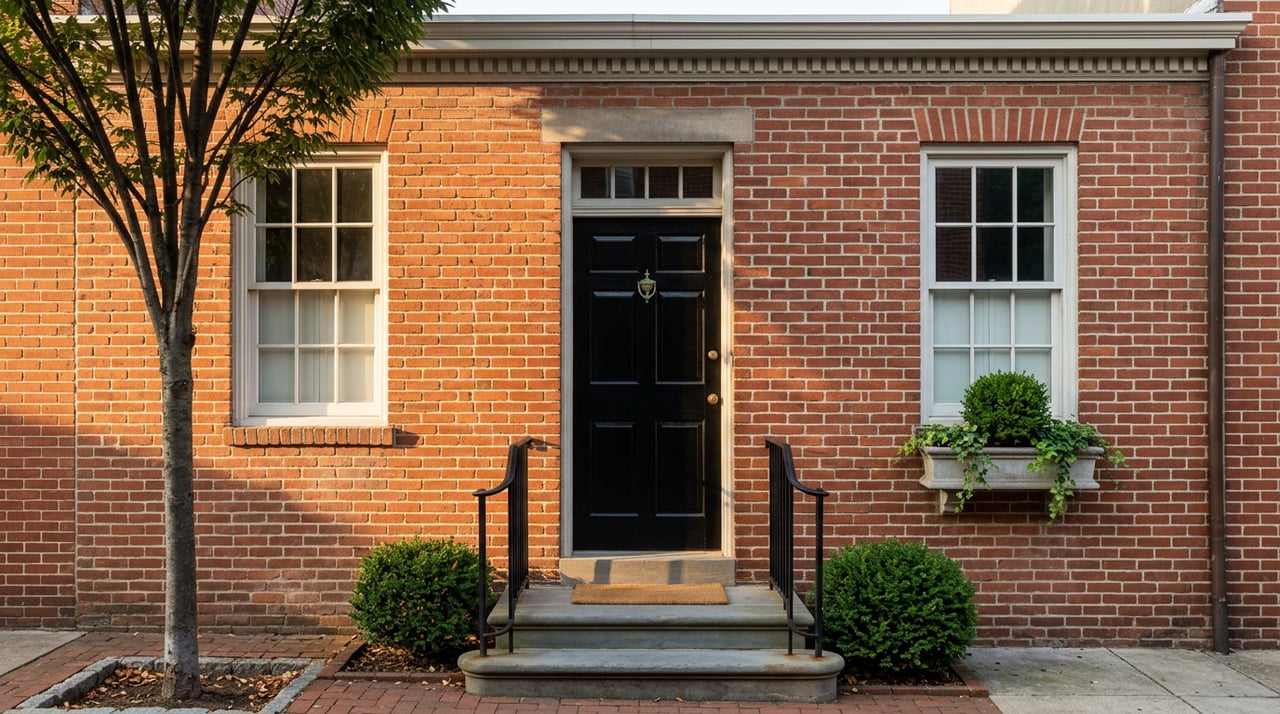
Saturday morning in Takoma starts the same way for a lot of people: coffee first, then produce, then somewhere to sit outside before the heat sets in. The walk from a rowhouse near Blair Road to a cup of Lost Sock Roasters coffee and back with a bag of peaches from the farmers market covers maybe half a mile. It also crosses a state line twice, though almost nobody walking it could point to where.
That is not a quirk of geography. It is the actual shape of daily life in this neighborhood, and it explains something the map alone does not: why one commercial strip feels like a single place even though two different governments are, at any given moment, paying for different pieces of it.
The Business Association That Refuses to Draw a Line
The organization that holds Old Takoma together does not treat the border as relevant to its own mission. The Old Takoma Business Association describes its territory as running from the Takoma Junction in Takoma Park, MD to the Takoma Theater in Washington, DC, a stretch that begins in one jurisdiction and ends in another without so much as a sign to mark the change.
Boundary lines are invisible to the OTBA.
That is the association's own framing, not a metaphor a writer added later. It shows up because the group works both sides of the same street, coordinating Main Street Takoma programming, storefront grants, and festival logistics regardless of which government technically has jurisdiction over the sidewalk in question.
Coffee, Juice, and a 1920s Theater, Fully in the District
The clearest DC anchor in the corridor is the old Takoma Theatre, sitting at the intersection of Butternut Street and 4th Street NW, on Washington's side of the line. The theater dates to the 1920s and sat empty for roughly a decade before a redevelopment brought it back into daily use.
Two small businesses now share that lobby. Lost Sock Roasters, founded by Nico Cabrera and Jeff Yerxa, opened its first standalone retail location there and currently keeps hours of Tuesday through Friday from 7 a.m. to 4 p.m., with weekend hours from 8 a.m. to 4 p.m. Turning Natural, a juice bar founded by former aeronautical engineer Jerri Evans, opened as the brand's sixth DC-area location in the same building and runs weekdays from 9 a.m. to 5 p.m.
Both businesses sit inside a building most residents would describe simply as "the theater on 4th Street," with no mental note that it happens to be squarely on the District side of Old Takoma.
| Anchor Point | Address | Jurisdiction | Known For |
|---|---|---|---|
| Lost Sock Roasters | 6833 4th St NW | Washington, DC | Small-batch coffee roasted in Brightwood Park, served from the old theater lobby |
| Turning Natural | 6833 4th St NW | Washington, DC | Cold-pressed juice bar, the brand's sixth DC-area location |
| Takoma Station Tavern | 6914 4th St NW | Washington, DC | Nightly live music, including a long-running Tuesday jazz jam |
| Takoma Park Farmers Market | 6931 Laurel Ave | Takoma Park, MD | Sunday producer-only market running continuously since 1983 |
Then the Same Walk Crosses Into Maryland
Keep walking that same loop toward the market and the ground shifts jurisdiction without a curb cut to announce it. The Takoma Park Farmers Market sets up behind the shops on Laurel Avenue, next to Truist Bank, squarely in Takoma Park, Maryland. As of 2026 it runs Sundays from 9 a.m. to 1 p.m., a schedule change from the market's longer-standing hours in past years.
This is not a young institution. The market has operated continuously since 1983, putting its current run at 43 years, and it still functions as a producers-only market, meaning every vendor is selling what they grow or make rather than reselling from a distributor. Right now that means peaches, blueberries, plums, raspberries, summer squash, green beans, eggplants, greens, and beets, alongside the market's own Garlic Festival, timed to when the season's just-cured garlic crop comes in.
None of that changes how residents talk about the trip. It is "going to the market," not "crossing into Maryland to go to the market," even though the second description is the literal one.
The Bar Everyone Assumes Is in the Other Jurisdiction
Takoma Station Tavern sits at 6914 4th Street NW, which places it firmly on the District side, a few doors from the theater. Even so, at least one music publication describing the venue's transformation into "a vital and dedicated jazz nightspot" got the jurisdiction wrong in print, referring to it as sitting in Takoma Park. If a publication that covers the venue for a living can misplace it, the confusion among neighbors walking past on a Tuesday night is understandable.
The tavern's current hours run Tuesday and Wednesday from 5 to 11 p.m., Thursday to 11:30 p.m., Friday to midnight, Saturday from 7 p.m. to midnight, and Sunday noon to 11 p.m., closed Mondays. The weekly Takoma Tuesday Jazz Jam, billed as the neighborhood's "Friendliest Jam in Town", runs every Tuesday with no cover charge. First Sundays of the month bring Raheem Devaughn and the Crank Crusaders. This August alone, the ticketed Saturday jazz series has already brought in Eric Alexander and Steve Turre, with Bobby Muncy, Marshall Keys, and Maria Grand still on the calendar before the month closes out.
All of it happens on the DC side of a corridor most people describe, correctly or not, as simply Takoma Park.
One Weekend a Year, the Line Disappears on Paper Too
Eight weeks from now, on Sunday, October 4, 2026, the corridor's split identity becomes official for a single day. The Takoma Park Street Festival returns for its 45th year, running from 10 a.m. to 5 p.m. along a route that starts on Carroll Avenue in Takoma Park, Maryland, and continues onto Carroll Street NW in Takoma, DC. This year's event is expected to bring more than 185 vendor booths and 18 bands performing across three stages, with the DC blocks fully open and participating rather than treated as an afterthought to the Maryland side.
For one Sunday, the paperwork catches up to what residents already assumed: it is one festival, one street, one neighborhood, regardless of which side of Eastern Avenue a given tent happens to sit on.
Why the Line Still Shows Up, Just Not in the Way You'd Expect
The border does still matter, just not to foot traffic. Washington's Department of Small and Local Business Development is currently funding a 2026 micro-grant program specifically for businesses in the Takoma, DC commercial corridor, covering Carroll Street, Willow Street, Maple Street, 4th Street, Butternut Street, Cedar Street, and Blair Road NW. Grant recipients have until August 31, 2026, just three weeks out, to submit paperwork for reimbursement on approved signage, awnings, and interior upgrades.
That grant only reaches storefronts on the District side. The Maryland side of Old Takoma has its own separate mechanisms for the same kind of support, administered through a different set of local and state programs. Two governments are funding two halves of what residents experience as a single block, and the seam between them shows up on a spreadsheet somewhere in city and county offices, never on the sidewalk itself.
That is the thing worth understanding about Takoma before assuming the map tells you anything useful about how the neighborhood actually functions day to day. The jurisdiction changes. The habit does not.
For anyone curious about how this kind of split-identity corridor shapes property values, walkability, or day-to-day convenience on either side of the line, The MAC Group knows this stretch of DC and Maryland well enough to walk you through it block by block.