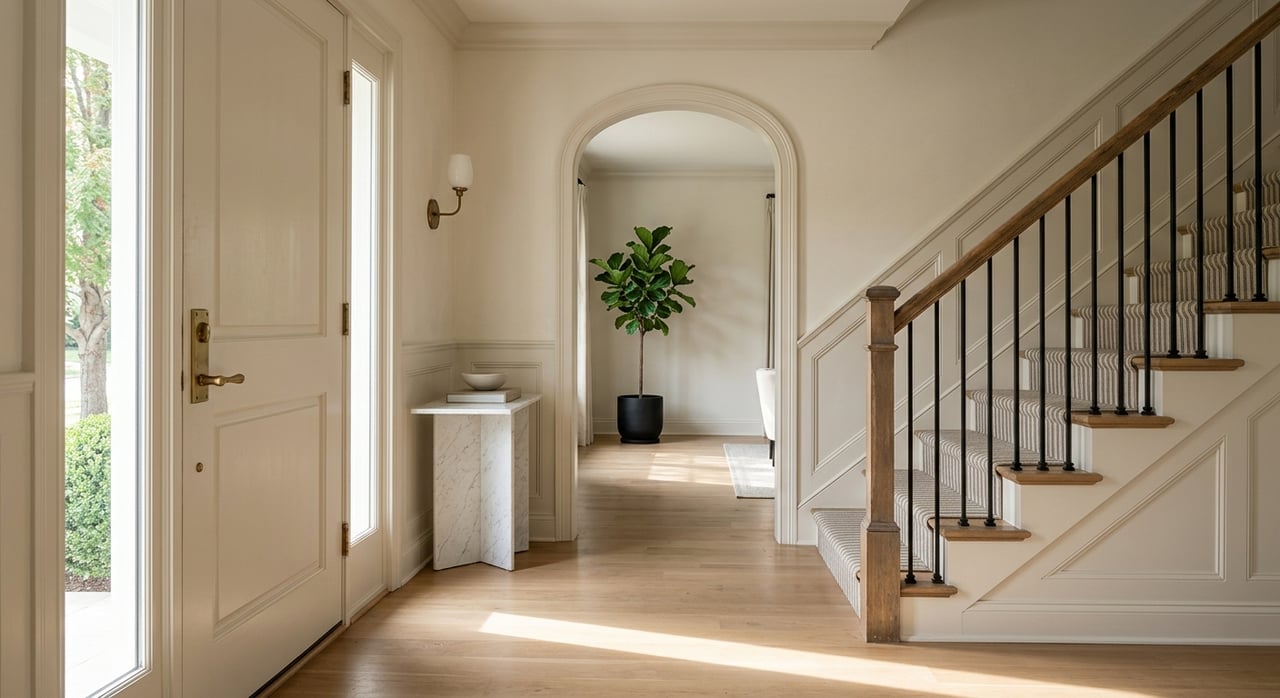
If you are deciding between Chevy Chase DC and the nearby Maryland suburbs, you are not choosing between one clear city option and one clear suburban option. You are comparing several distinct living patterns, each with its own housing mix, commute style, and everyday rhythm. Understanding those differences can help you focus your search and choose the setting that fits how you actually want to live. Let’s dive in.
Start With the Right Comparison
Chevy Chase DC is best understood as a Ward 3 neighborhood with a local commercial core, denser apartment and townhouse pockets, and single-family homes farther from Connecticut Avenue. According to the DC Office of Planning, the area is also the focus of planning efforts intended to bring new housing, retail, and community amenities to upper Connecticut Avenue NW.
That already makes one thing clear. Chevy Chase DC is not frozen in time, but it still has a distinct neighborhood identity shaped by its historic layout and residential feel.
The Maryland side is more varied than many buyers expect. The Town of Chevy Chase is a self-governing municipality in Montgomery County, while Friendship Heights and Bethesda function more as close-in, mixed-use centers. Official planning materials describe Friendship Heights as a cross-jurisdictional urban area and Bethesda as a thriving urban center, which means these places can feel very different from one another.
Chevy Chase DC at a Glance
Chevy Chase DC appeals to buyers who want a classic Northwest DC setting with a strong sense of place. The historic district is overwhelmingly made up of single-family homes dating from 1907 through the mid-twentieth century, with apartment buildings concentrated mainly along Connecticut Avenue.
The original subdivision was designed with a planned residential character in mind. The historic-district nomination describes tree-lined streets, sizeable lots, detached and semi-detached homes, and alleys that keep garages and utility structures behind the houses. That design still shapes how the neighborhood feels today.
In practical terms, this means you may find a calmer residential street network once you move away from Connecticut Avenue. At the same time, you still have a neighborhood-based commercial corridor that gives the area daily convenience without making it feel like a dense downtown.
How the Maryland Options Differ
One of the biggest mistakes buyers make is treating the nearby Maryland options as interchangeable. They are not.
Chevy Chase, MD is the closest match for buyers who want an established, mostly residential suburban setting. Montgomery Planning materials emphasize a home-suburb identity, and planning for Chevy Chase Lake supports moderate-scale, community-oriented mixed-use development near transit while still protecting extensive single-family detached residential areas.
Friendship Heights is more transit-oriented and retail-focused. Planning sources describe it as a mixed-use area with a primarily residential village, several large retailers, and offices. If you want more of an urban edge with quick access to shopping and Metro, this area will likely feel very different from either Chevy Chase DC or Chevy Chase, MD.
Bethesda is the most downtown-like option in this comparison. Its downtown plan is framed as a long-range vision for a sustainable urban center, and the area is closely associated with a major business district, Bethesda Row shopping, and a denser mix of uses.
Housing Styles and What They Mean for You
Housing stock often drives this decision as much as location. In Chevy Chase DC, the historic district remains strongly associated with detached homes, some semi-detached homes, and apartment buildings clustered along Connecticut Avenue.
That creates a fairly specific range of choices. If you are drawn to historic residential architecture, tree-lined streets, and a neighborhood pattern that feels orderly and established, Chevy Chase DC may check many of your boxes.
On the Maryland side, the housing spectrum broadens. Planning documents suggest a wider mix that includes traditional detached homes in places like Chevy Chase, MD, along with more condo-heavy and mixed-use options in Friendship Heights and Bethesda.
This matters because your search may shift based on the lifestyle you want. A buyer looking for a detached home with a quieter residential setting may focus on Chevy Chase, MD, while someone prioritizing a condo near transit and retail may lean toward Friendship Heights or Bethesda.
Commute Patterns Can Change the Decision
For many buyers, the real dividing line is transportation. Chevy Chase DC is shaped by the Connecticut Avenue bus corridor, and that influences how the neighborhood functions day to day.
WMATA’s D70 route connects Chevy Chase Circle to Farragut Square by way of Van Ness, Cleveland Park, Woodley Park, and Dupont Circle. On weekdays, it operates from about 5 a.m. to 2 a.m., with morning rush frequency around every 12 minutes. That makes the DC side feel more bus-first and corridor-oriented.
The Maryland side offers stronger rail access. Bethesda station is on the Red Line and is within walking distance of Bethesda Row shopping and the Bethesda Trolley Trail, while Friendship Heights station is on Wisconsin Avenue at Western Avenue and offers direct access to major shopping centers.
Bus service is also strong in this corridor. WMATA’s D80 runs from Friendship Heights to Union Station via Tenleytown, Cathedral Heights, Wisconsin Avenue, Washington Circle, and McPherson Square, with 24-hour service and rush-period frequency of about every 6 to 10 minutes.
Daily Feel: Residential Enclave or Mixed-Use Hub?
Chevy Chase DC still reads as a compact residential enclave with a local main street. The historic district is described as a self-sufficient community and an urban suburb, with institutional buildings, residential side streets, and a commercial corridor that serves local needs.
It also retains an older streetcar-suburb pattern. Alleys and rear garages help keep the public streetscape focused on homes and avenue frontage, which adds to the neighborhood’s distinctive feel.
Nearby Maryland settings offer a broader range of everyday experiences. Montgomery Planning points to assets such as Norwood Local Park and the Capital Crescent Trail in Chevy Chase, reinforcing a quieter suburban character in some areas.
Friendship Heights feels more cross-jurisdictional, transit-oriented, and retail-heavy. Bethesda feels more like a true downtown, with a denser urban fabric and planning emphasis on parks and open space within that setting.
Which Area Fits Your Priorities?
If you are weighing these locations, it helps to match each one to the kind of daily life you want.
Choose Chevy Chase DC If You Want
- A classic DC address
- A tightly knit historic streetscape
- A primarily residential setting with a local commercial corridor
- A bus-oriented commute along Connecticut Avenue
- Detached or semi-detached homes in an established neighborhood pattern
Choose Chevy Chase, MD If You Want
- A setting that feels closest to a traditional residential suburb
- Established detached-home areas
- A quieter home-suburb identity
- Some access to mixed-use growth near transit without a fully urban feel
Choose Friendship Heights If You Want
- Stronger Metro access
- A mixed-use setting with retail and office presence
- More condo or apartment possibilities
- A location that feels more active and transit-centered
Choose Bethesda If You Want
- A true downtown-style environment
- Red Line access
- Shopping and activity centered around a larger business district
- A broader mix of housing in a denser urban setting
The Best Choice Depends on Your Lifestyle
There is no one right answer here. The best fit depends on whether you prioritize historic character, detached housing, a bus-based commute, rail access, walkable mixed-use convenience, or a more downtown atmosphere.
That is why this decision works best when you stop thinking in terms of DC versus the suburbs and start comparing specific places. Chevy Chase DC, Chevy Chase, MD, Friendship Heights, and Bethesda each offer a different version of close-in living.
When you look at the choice through that lens, your priorities usually become much clearer. If you want help narrowing down which neighborhood best matches your goals, The MAC Group can help you compare options across DC and close-in Maryland with the kind of detail that makes your next move feel more confident.
FAQs
What is the main difference between Chevy Chase DC and Chevy Chase, MD?
- Chevy Chase DC is more closely tied to a historic DC neighborhood pattern with a local commercial corridor and bus-oriented commuting, while Chevy Chase, MD is generally the closer match for buyers seeking an established, mostly residential suburban setting.
Is Friendship Heights similar to Chevy Chase DC for homebuyers?
- Not exactly. Friendship Heights is more transit-oriented and mixed-use, with major retail, offices, and direct Red Line access, which creates a different day-to-day feel than the more residential street network in Chevy Chase DC.
Does Bethesda feel more urban than Chevy Chase DC?
- Yes. Official planning materials frame Bethesda as a thriving urban center, and it typically offers a more downtown-style environment with a denser mix of housing, shopping, and business activity.
Is Chevy Chase DC a good fit if you rely on Metro rail?
- Buyers who want stronger rail access often look more closely at Friendship Heights or Bethesda, while Chevy Chase DC tends to make more sense for those comfortable with a bus-first commute along Connecticut Avenue.
Are the Maryland options near Chevy Chase all the same type of suburb?
- No. Chevy Chase, MD feels more residential, Friendship Heights feels more transit- and retail-oriented, and Bethesda feels more like a true downtown, so each option supports a different lifestyle.
What kind of homes are common in Chevy Chase DC?
- The historic district is known mostly for single-family homes from the early to mid-twentieth century, along with some semi-detached homes and apartment buildings clustered mainly along Connecticut Avenue.